When Trailer Panel Seals Face Unexpected Failures
Keeping Rugged Recreational Trailers Watertight
When a camper trailer manufacturer’s sealant started oozing out of assembled panels and weakening at curves, the cause wasn’t obvious. The polyurethane looked fine during assembly, but failures showed up later. We stepped in to diagnose the issue and quickly found a solution.
The failure came when assembling lightweight panels with thin-gauge aluminum, foam, and gaps that needed to be filled. Their initial process was quick, repeatable, and cosmetically sharp, but failing too frequently.
The Glue Doctors® Delivered
- Reduced post-assembly cleanup & rework
- Improved wet-out for more reliable gasket retention
- Identified root cause of the defect
- Iterated through chemistries to find a solution
The Challenge: A Sealant that Failed After Assembly
Modern trailers depend on sealants and adhesives for smooth panels and rugged attachments that resist corrosion. But when the wrong chemistry meets a confined joint geometry, surprise variables can turn a reliable process into a rework burden.
Our customer had an efficient edge-finishing method for these panels. A channel was routed along the panel's edge, sealant was applied, and a T-gasket was installed to cover the exposed core and deliver a clean, sealed finish.
The issue was not obvious during assembly. Panels could look clean when taped and staged, but then later return with sealant oozing out onto visible surfaces, creating a frustrating cleanup step and cosmetic rework. In many cases, the gasket bond would also weaken, especially in tighter geometry where incomplete wet-out is less forgiving.
After taking a closer look at the application, consulting with the engineers on the project, and working with some of the leading adhesive manufacturers, four factors stood out.
Off Gassing During Cure Pushed Sealant Out
Like many adhesives, the polyurethane sealant generated gas during cure. In a confined routed channel, that pressure had limited paths to escape, so it could force sealant out of the joint over time. This largely explained the delayed squeeze-out the team was seeing.
The Sealant's Rheology Limited Wet-Out and Surface Area
The polyurethane ultimately did not flow well. Instead of wicking into the channel and contacting the groove walls consistently, it tended to sit at the base. That reduced effective bond area and made the joint more sensitive to stress and movement.
The Soft Core Made Application Inconsistent
With a soft core behind the skins, installation pressure could deform the edge slightly, which made it harder to achieve uniform sealant contact. That further increased variability in how well the sealant “wetted” the surfaces it needed to bond with.
Slow Green Strength Risked Assembly Disruption
As a moisture-cure sealant, the polyurethane took time to develop initial holding strength. During that window, the T-gasket could shift or release, forcing operators to manage timing carefully and limiting how quickly panels could move through production.
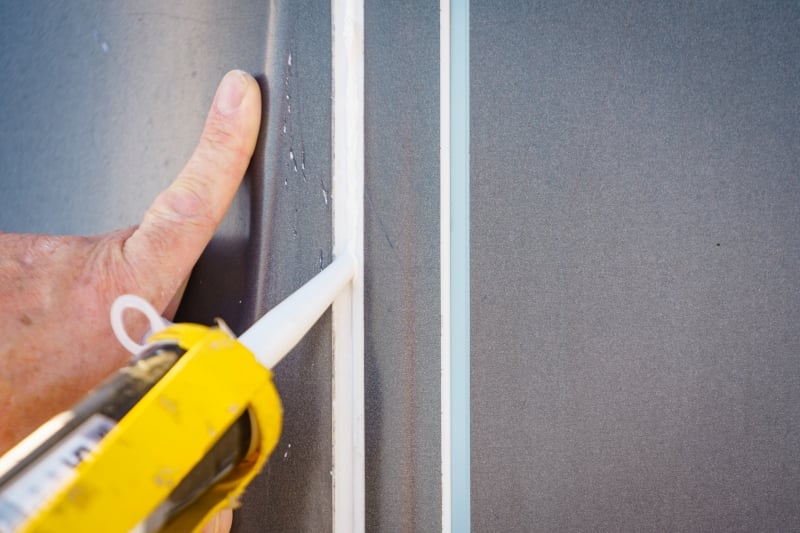
The Solution: An SMP Helps Flow, Wet-Out, and Cleaner Assembly
After testing different options and working with several vendors, we helped our customer’s team transition to a silyl-modified polymer sealant selected for their routed-channel application and gasket material.
Compared to the original polyurethane, the SMP option delivered:
- Improved extrusion & flow, aiding wet-out
- Cleaner post-assembly behavior
- Better day-to-day handling confidence
- Stronger adhesion to the T-gasket
With the SMP sealant in place, squeeze-out rework was eliminated, and gasket retention became consistent across straight runs and curves alike. The production team moved past a frustrating, time-consuming defect, and back to an edge-finishing process they could trust.
Troubleshoot Adhesive Failures with Expert Help
When something isn’t bonding, flowing, or curing the way it should, our experts are here to find the root cause and provide a reliable fix.